
Core Experimentation Loop
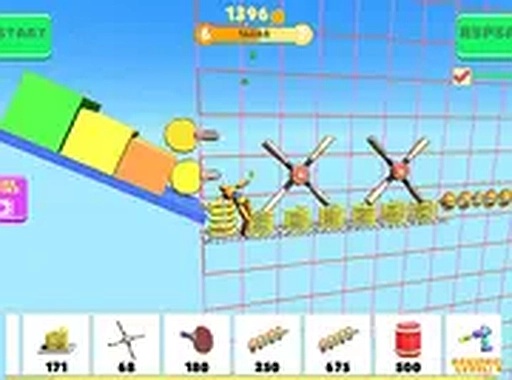
At its heart, this title is a digital laboratory where players place items into a scene and observe the results. The physics engine calculates collisions, gravity, and momentum in real time. A small character responds to each object placed, reacting with realistic movements like tumbling, sliding, or balancing. There are no objectives to complete, so the focus remains on trying new configurations and seeing what happens. This loop of placing, observing, and adjusting forms the entire experience.
Interface and Accessibility
The controls are straightforward: drag items from a sidebar and drop them into the active area. On touchscreens, tapping and dragging works seamlessly. Desktop users can click and drag with a mouse. A reset button clears the scene instantly, allowing for rapid experimentation. Full-screen mode is available for a more immersive view. The interface is minimal, keeping distractions low and letting the physics interactions take center stage.
Visual and Performance Design
The art style uses bright colors and simple shapes, making each object easy to identify. Animations are smooth, with objects bouncing, rolling, and stacking naturally. The game runs entirely in a web browser, so there is no need to install software. Performance is optimized for both desktop and tablet devices, ensuring consistent frame rates during complex scenes. The responsive layout adjusts to different screen sizes without losing clarity.
Open-Ended Play Philosophy
This game deliberately avoids traditional game mechanics like levels, scores, or timers. Instead, it encourages players to set their own goals. Some may try to build a tower, others might create a chain reaction. The absence of pressure makes it suitable for quick breaks or longer sessions. Each reset offers a blank canvas, inviting fresh ideas. The design supports repeated play because no two arrangements produce identical outcomes.
Learning Through Observation
While not a formal educational tool, the game naturally teaches basic physics concepts. Players see how mass affects movement, how angles change trajectories, and how objects interact upon contact. These observations happen organically through play rather than through instructions. Children and adults alike can develop an intuitive understanding of cause and effect. The trial-and-error process is gentle, with no penalty for mistakes.
Comments
0 comments