
Course Design and Movement
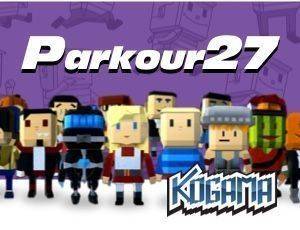
KOGAMA Parkour 27 Arcade Runner drops players into bright, blocky 3D courses built around running, jumping, and climbing. The core loop is straightforward: move forward, clear gaps, and scale platforms to reach the finish flag. A double jump expands your reach, letting you access higher ledges and correct mid-air mistakes. Movement feels smooth and responsive, which matters because later sections demand precise timing rather than raw speed.
Checkpoints, Coins, and Risk
Checkpoints limit the cost of failure. Fall off the course and you restart from the last checkpoint, not the beginning, so experimentation stays low-stakes. Coins sit along the main path and tucked into side routes, adding a light scoring layer. Some sections use moving blocks that require you to read the rhythm before committing to a jump. Rushing these moments usually ends in a fall, while a short pause to observe the pattern saves time overall.
Hidden Routes and Replay Value
Levels often contain alternate paths that branch away from the obvious route. These detours may hide coins or secret areas, and they give each course more than one way to finish. Because the game tracks your score and time, replaying a level to test a different route has a clear purpose. The design rewards curiosity without punishing players who prefer the direct path.
Who This Is For
The non-violent presentation and simple controls make this a reasonable pick for children and families. Players who enjoy agility challenges and precision platforming will find the difficulty curve approachable, though the later obstacle sections still ask for careful input. There is no combat or mature content, so the focus stays entirely on movement and route-finding.
Comments
0 comments