
Core Gameplay Loop
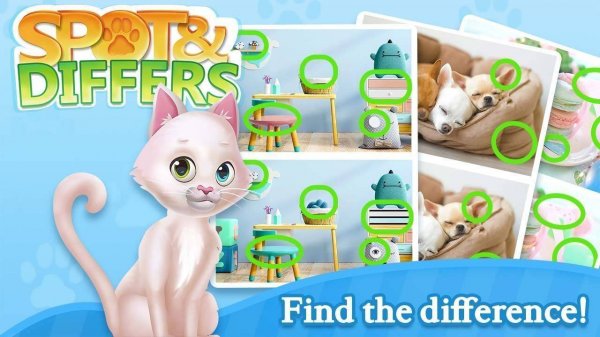
Players are shown two illustrations side by side. At first glance, they appear identical, but a closer look reveals small variations. These can be a missing flower, a shifted shadow, or a color change. Tapping on the difference marks it and adds to your progress. The game offers no timers or scores, allowing players to examine each image at their own speed.
Visual Style and Themes
The artwork covers a wide range of pleasant subjects: friendly animals, tidy kitchens, blooming gardens, and peaceful seasides. Each scene is drawn with a clean, colorful style that appeals to both children and adults. The variety keeps the experience fresh, as no two levels look alike. The images are detailed enough to provide a satisfying challenge without being cluttered.
Difficulty Curve
Early levels present obvious differences, such as a missing hat or a swapped color. As players advance, the variations become more subtle. A tree branch may have an extra leaf, or a window curtain might be a slightly different shade. This gradual increase in complexity ensures that players of all skill levels find the game engaging. The progression feels natural, never forcing players to rush.
Family-Friendly Design
The entire experience is built around accessibility. There are no complicated menus, instructions are minimal, and the touch controls are simple. The game is suitable for young children learning to focus, as well as older adults looking for a gentle mental exercise. The lack of time pressure means families can play together, discussing each image at a comfortable pace.
Benefits for Cognitive Skills
Regular play helps train attention to detail and visual memory. By systematically comparing two images, players practice scanning, pattern recognition, and concentration. These skills transfer to everyday activities like reading maps or finding items. The game serves as a light mental workout that feels more like a pleasant pastime than a demanding task.
Comments
0 comments